

Riga Municipal Police
|
Deployed:
|
2023 |
|
Solution:
|
Automated traffic enforcement system |
|
Location:
|
Riga, Latvia |
From 3,600 Violations to safer streets: Automated traffic enforcement in Riga
About the client
Riga Municipal Police helps maintain public order and road safety in Latvia’s capital. Its teams work with the Road Traffic Safety Directorate (CSDD) to assess traffic incidents and determine penalties. In a busy urban road network, the police need to protect every road user while using limited enforcement resources where they matter most.
Beyond spot-check enforcement
Manual patrols are essential, but they cannot watch every high-risk intersection continuously. In the year before the traffic enforcement system rollout, Riga Municipal Police issued 1,250 red-light tickets across the entire city through manual patrols. The challenge was not simply to issue more penalties. The city needed consistent coverage that could deter risky behavior, capture reliable evidence, and reveal where and when violations were happening, without taking final decisions away from authorized officers.
Edge intelligence with human-in-the-loop oversight
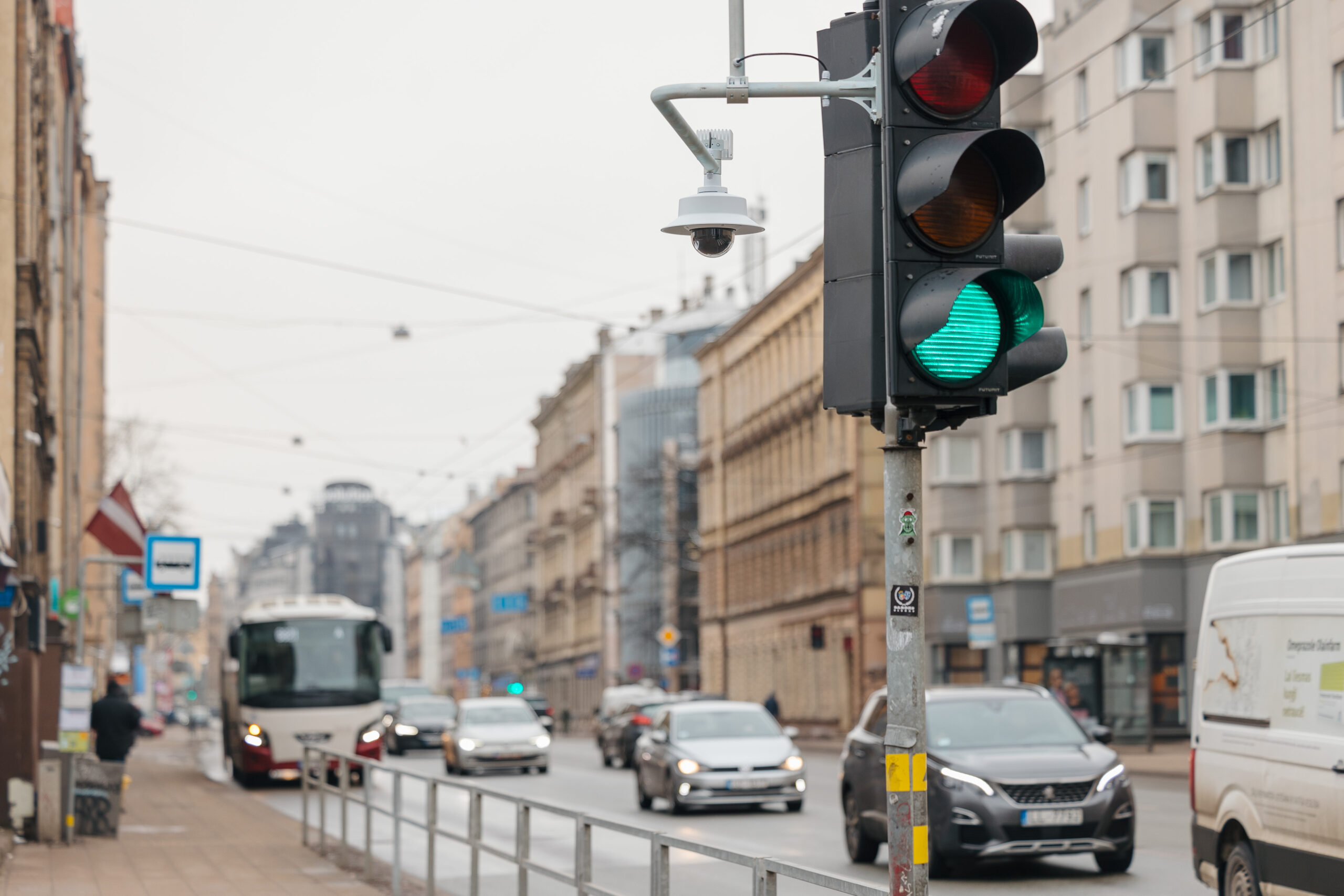
The initial rollout deployed LMT Deepvision’s automated traffic enforcement system across nine high-risk locations. Powered by high-resolution cameras, machine vision, and edge computing, the system automatically detects vehicles, reads license plates, and monitors signal compliance. From a single hardware footprint, the platform identifies multiple infractions in real time, including red-light violations, bus lane misuse, and illegal stopping at intersections.
When the system identifies a potential violation, it prepares the relevant digital evidence and forwards the event to Riga Municipal Police and the Road Traffic Safety Directorate (CSDD). Authorized teams assess each incident and decide whether to issue a penalty. A central interface supports event review, case status, history, reporting, and data export, moving repetitive work to the system while keeping judgment with people. The solution can use existing infrastructure or standalone edge devices, allowing coverage to expand without major construction.
“Smart control systems have become an indispensable tool for organizing the city’s circulatory system – the traffic flow – preventing the intentional creation of congestion and ensuring priority for public transport. The goal of technology is not to punish, but to instill self-discipline: we see that precise monitoring of speed limits, red lights, and traffic lanes helps create a safer and more predictable environment for every road user and even saves lives,”
A 66% drop in red-light running
At the first nine monitored locations, recorded red-light violations fell by 66% over six months, from a peak of 3,636 in August 2025 to 1,134 in February 2026. The decline continued steadily through autumn and winter. Longer-term monitoring will help distinguish sustained behavior change from seasonal effects, but the trend already clearly indicates improving compliance.
The system data also revealed when risk was highest: the 4-5 p.m. period recorded the most red-light violations, while the morning commute saw about half as many. This helps the police focus communication and operational attention where they can have the greatest effect. Just as importantly, the system provides continuous coverage and structured evidence without removing human judgment from enforcement.